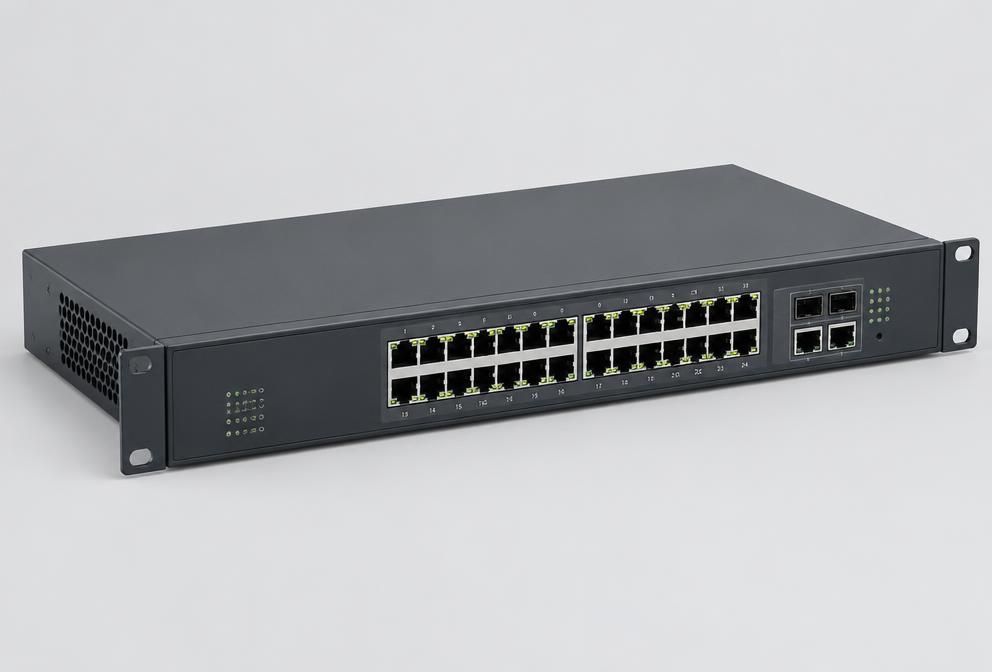
Short answer
A PoE switch first detects whether the connected device can accept power, negotiates how much it needs, then injects DC voltage onto the ethernet pairs alongside the data. Power is only applied after that handshake, so plugging in a non-PoE device is safe.
Updated 2026-09-21 · 3 min read
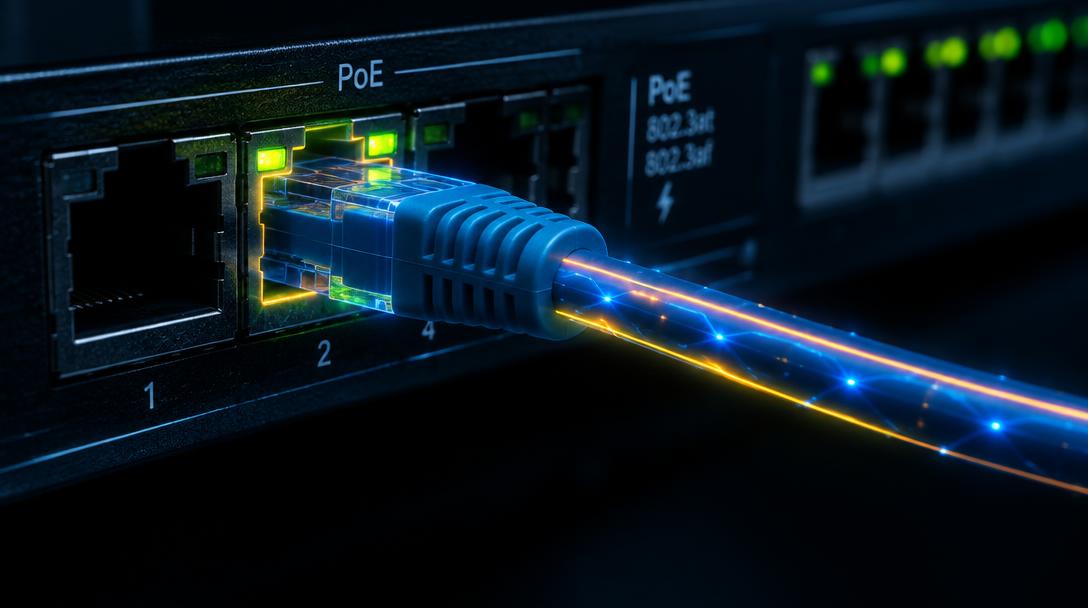
The four steps on every port
- Detection — the switch applies a small voltage and looks for the signature resistance of a PoE device
- Classification — the device declares its power class, so the switch knows how much to reserve
- Power-up — 44–57 V DC is applied and the device boots
- Monitoring — the switch watches the load and cuts power if the device is unplugged or faults
Which cable pairs carry the power
PoE and PoE+ use two of the four pairs. PoE++ (802.3bt) uses all four, which is why higher-power devices need all eight cores terminated correctly. A cable punched down with only four cores will pass gigabit data but fail to power a bt device.
Why the handshake matters
Because power is negotiated, not simply pushed onto the line, a laptop or printer plugged into a PoE port is not damaged. Passive PoE injectors from older kit do push voltage unconditionally, and those are the ones to keep away from your standard patching.
Related questions
- Does PoE slow the network down?
- No. Power and data travel on the same cable without affecting link speed.
- How far can PoE run?
- 100 metres over Cat5e or better, the same limit as ordinary ethernet. Extenders push this further at reduced power.
Hardware for this
The ranges below cover what this article describes, supplied in the UK with lead times confirmed before you commit.