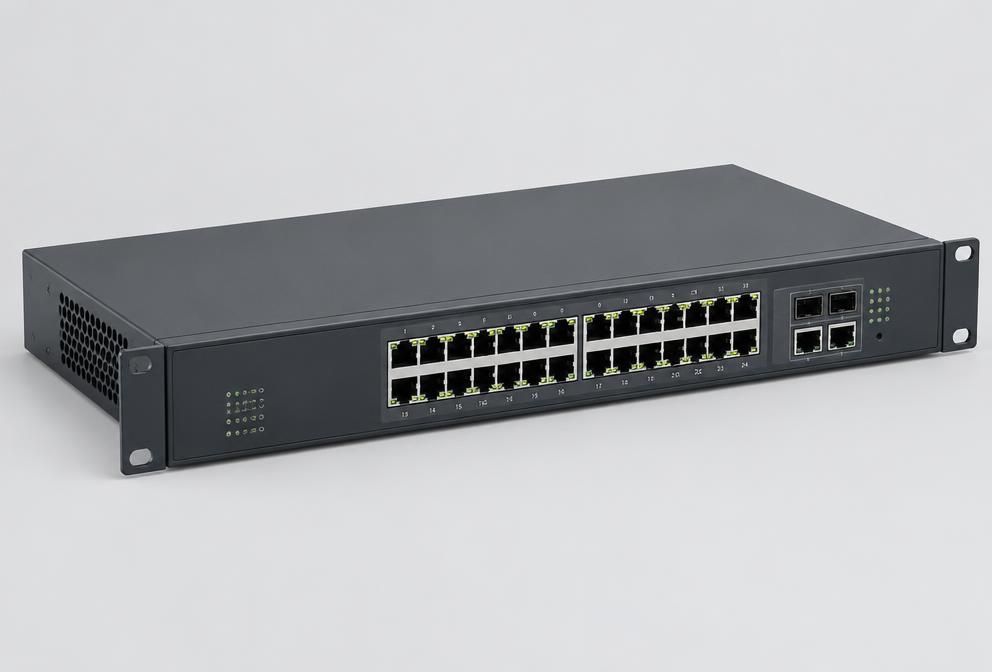
Short answer
Yes. A PoE switch works as a normal switch for non-PoE devices such as laptops, printers, PCs and servers. The port only sends power after it detects a device designed to accept it, so equipment that does not support PoE simply gets a standard network connection.
Updated 2026-09-21 · 3 min read
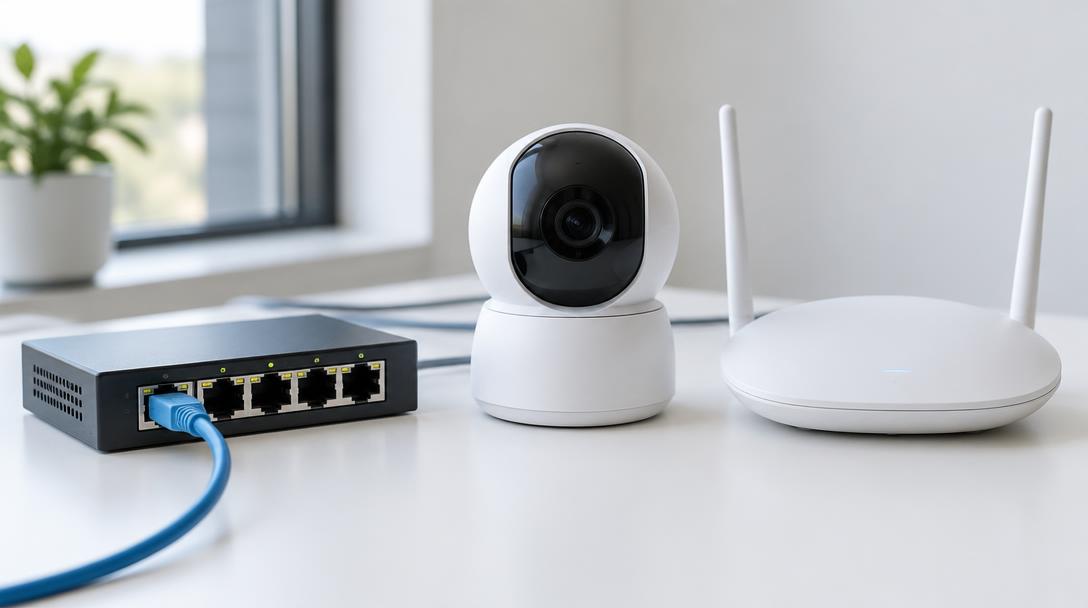
Why it is safe
Standards-based PoE (802.3af, at and bt) always runs a detection step first. No valid signature means no voltage on the line. You can mix cameras, access points, desktops and printers across the same switch freely.
The one exception
Passive PoE injectors and some older or unbranded kit apply voltage with no detection at all. Those can damage a non-PoE device. If a port or injector is labelled passive PoE, keep it on its own dedicated run and label both ends.
Should you buy PoE on every port?
- Full-PoE switches cost more and use more power, but avoid patching mistakes
- Part-PoE models (e.g. 8 of 24 ports) suit sites with only a few powered devices
- If cameras or access points are likely later, full PoE is usually the cheaper decision
Related questions
- Will a PoE port damage my laptop?
- No, provided it is a standards-based PoE port. It will not send power until it detects a powered device.
- Does a non-PoE device use any of the power budget?
- No. Unpowered ports consume nothing from the budget.
Hardware for this
The ranges below cover what this article describes, supplied in the UK with lead times confirmed before you commit.